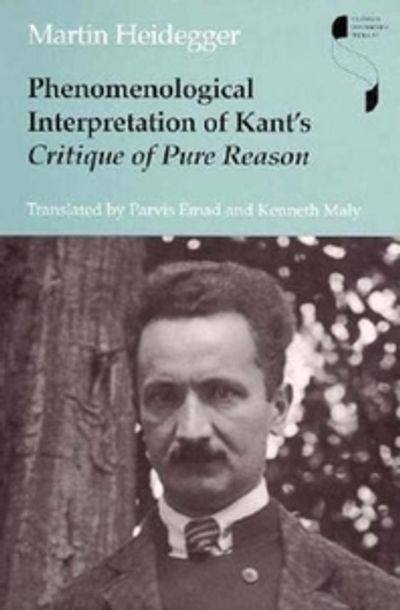
요즘 하이데거의 1927-1928년 마르부르크 대학교 겨울 학기 강의인 Phenomenological Interpretation of Kant's Critique of Pure Reason과 헨리 E. 앨리슨의 대표작인 Kant's Transcendental Idealism을 번갈아 가면서 읽고 있습니다. 서로 상이한 이유 때문에 두 책을 읽었는데, 읽다 보니 흥미롭게도 두 책에서 겹치는 해석이 상당히 많더라고요.
앨리슨은 칸트에 대한 기존의 '두 대상 해석(two-object interpretation)' 혹은 '두 세계 해석(two-world interpretaion)'을 비판하면서, '두 측면 해석(two-aspect interpretaion)'을 제시한 것으로 유명한 학자입니다. 고전적인 칸트 해석이 대개 '두 대상 해석'이었던 것에 비추어본다면, (특별히, 스트로슨과 가이어 등 영어권의 주도적 칸트 해석자들이 '두 대상 해석'에 근거하여 칸트의 초월적 관념론에 비판적 태도를 취하였다는 점에 비추어본다면,) 앨리슨의 '두 측면 해석'은 꽤나 새로운 것으로 간주되었고, 또 '사물 자체의 아포리아'에 대한 대답을 제시하기도 한다는 점에서 주목을 받았죠.
'두 대상 해석'과 '두 측면 해석'은 '현상'과 '사물 자체'라는 칸트의 유명한 구분을 어떻게 이해할 것인지에 따라 의견이 나뉘어집니다. 말 그대로, (a) 두 대상 해석은 현상과 사물 자체가 서로 별개의 두 대상이라고 주장하죠. 현상은 우리에게 주어진 일종의 '허구적인 것'이고, 사물 자체는 실제로 존재하는 '실재'라고 말입니다. 반대로, (b) 두 측면 해석은 현상과 사물 자체가 하나의 대상의 서로 다른 측면이라고 주장하죠. 사물이 '우리에게 드러난 측면'이 현상이고, 사물이 '그 자체로 존재하는 측면'이 사물 자체라고 말입니다.
여기서 논쟁의 핵심은, 사물 자체가 과연 현상에 비해 '존재론적 우선성'을 지닌다고 할 수 있는지에 있습니다. 두 대상 해석은 사물 자체가 '실재'라고 강조하기 때문에 현상을 허구적인 것으로 보는 반면, 두 측면 해석은 현상과 사물 자체가 모두 '실재'이지만 단지 서로 다른 맥락이나 관점에서 파악된 것이라고 주장하죠. 전자는 맥락 독립적 의미의 실재가 칸트의 철학에서 상정된다고 생각하고, 후자는 그런 실재가 칸트의 철학에서 상정되지 않는다고 생각하는 것이죠. 앨리슨은 이렇게 표현합니다.
As I shall argue at greater length, this epistemologically based understanding of transcendental idealism requires that the transcendental distinction between appearances and things in themselves be understood as holding between two ways of considering things (as they appear and as they are in themselves) rather than as, on the more traditional reading, between two ontologically distinct sets of entities (appearances and things in themselves). In this regard, it may be characterized as a “two-aspect” reading. (Allison, 2004: 16)
It lies rather in the assumption that we must really be one or the other in some ontologically privileged, context-independent sense. Such an assumption is unavoidable for transcendental realism with its theocentric paradigm, but it is precisely what is called into question by Kant’s “Copernican revolution.” (Allison, 2004: 49)
그런데 가만히 보니, 하이데거의 칸트 해석이 일종의 '두 측면 해석'이라고 할 수 있겠더라고요. 하이데거도 앨리슨처럼 현상이 사물 자체 옆에 놓인 또 다른 '사물'이 아니라고 강조하면서, 심지어 현상이 이미 '대상 자체' 혹은 '사물 자체'라고 지적하거든요. "사물 자체는 다른 대상이 아니라 같은 대상에 대한 표상의 다른 관계이다."라는 칸트의 『유작(Opus Postumum)』의 구절을 인용하면서 말이에요. 앨리슨의 책은 1983년에 처음 출간되었는데, 하이데거는 거의 50년 전에 이미 두 측면 해석에 근거하여 칸트를 읽은 것이죠.
Rather appearances are objects themselves, or things. Furthermore, appearances are also not other things next to or prior to the things themselves. Rather appearances are just those things themselves that we encounter and discover as extant within the world. (Heidegger, 1927-1928 [1997]: 68)
The difference between the thing itself and appearance always refers to things themselves. However, [this difference refers to] things themselves—under the title of "appearance" insofar as they are encountered by finite intuition, under the title "thing in itself" insofar as they stem from an infinite intuition which first of all produces these things. […] But this "in itself" remains hidden from every finite intuition insofar as this intuition does not first produce [things] and put [them] in place, but lets something already existing [dastehend] be encountered. "The thing in itself (ens per se) is not another ob-ject but another relation (respectus) of representation to the same ob-ject." Various titles express that the same thing can be the correlate of totally different modes of intuition (of intuitus onginarius as well as of intuitus derivativus). (Heidegger, 1927-1928 [1997]: 68)
실제로, 인터넷을 뒤져 보니, 캘리포니아 주립 대학교 철학과의 람베스가 쓴 Heidegger's Interpretation of Kant라는 책이 정확히 이 점을 지적하더라고요. 하이데거의 칸트 해석은 오늘날 연구자들이 말하는 '두 측면' 해석이라고 할 수 있다고 말이에요.
In particular, human knowers cognize appearances and not things in themselves. Heidegger’s interpretation of this distinction is aligned with what contemporary interpreters of Kant call a “two-aspect view.” That is, the appearance and the thing in itself do not refer to two different beings, in two different worlds (the so-called two-world view), but rather refer to two different perspectives on one and the same being. (Lambeth, 2023: 76)
물론, 하이데거의 칸트 해석에서 핵심은 '두 대상 해석'과 '두 측면 해석' 중에서 무엇이 더 올바른지에 달려 있지는 않아요. 하이데거는 자신이 제시한 '현존재 분석론'의 관점에서 칸트의 『순수이성비판』을 독해하려고 하고, 그래서 칸트가 현상학의 선구자이면서도 여전히 철학적 한계를 지닌 인물이라고 말하고 싶어하거든요. 상상력의 도식 작용을 중심으로 '시간성'에 대한 논의를 풀어가려는 하이데거의 유명한 논의도 바로 그 맥락에서 나오는 것이죠.
다만, 하이데거의 칸트 강의록을 읽다보면, 왜 이 사람이 당대 학생들에게 '사유의 왕국의 숨은 왕'이라고까지 불렸는지 확실히 알 수 있겠더라고요. 복잡한 외계어로 가득 차 있는 하이데거 본인의 주요 저작들과는 달리, 강의록에서 하이데거는 굉장히 명쾌한 어조로 칸트의 텍스트를 분석할 뿐만 아니라, 그 분석을 대단히 참신한 방향으로 이끌어가거든요. 단순히 "칸트는 …라고 말했다."라고 설명하는 수준을 넘어서, 칸트의 논의를 현상학적 맥락과 연관짓고, 그 맥락을 바탕으로 독창적인 해설을 제시하고, 그 해설을 바탕으로 신칸트주의의 기존 칸트 해석을 비판하니, 당대 학생들에게는 하이데거의 칸트 강의가 그야말로 최첨단의 학술적 논의였겠죠.