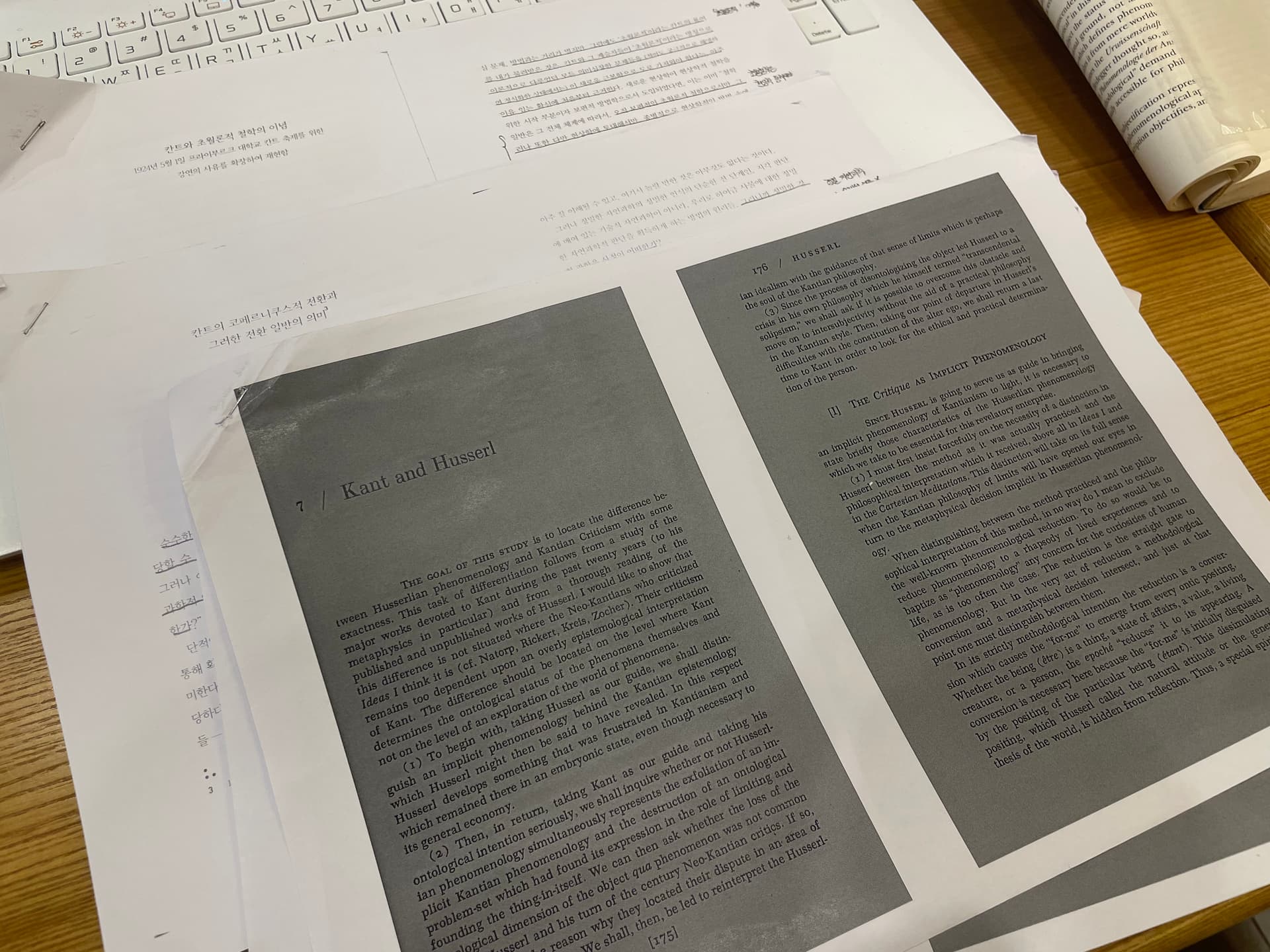
리쾨르가 쓴 "Kant and Husserl"에서 칸트의 '코페르니쿠스적 혁명'을 일종의 '판단중지'로 해석한 내용을 읽었습니다. 코페르니쿠스가 태양이 지구를 돈다는 일상적 상식을 잠깐 중단시키고서 과학적 탐구를 진행하려 했던 것처럼, 칸트도 대상이 인식에 우선한다는 일상적 상식을 잠깐 중단시키고서 철학적 탐구를 진행하려고 했고, 후설의 현상학에서는 이렇게 일상적 상식을 중단시킨 채 초월론적 태도에서 '사태 자체'를 보려고 하는 노력을 '판단중지'라고 부른다는 것이죠.
The Copernican Revolution, disengaged from the epistemological hypothesis, is nothing other than the phenomenological epoche. It constitutes a vast reduction which moves not merely from the constituted sciences, from successful knowledge, to their conditions of legitimacy; it also moves from the totality of appearing to its conditions of constitution. This descriptive design, usually overshadowed by the justificatory intention of the Critique, appears every time Kant renounces dependence on a constituted science and directly defines what he calls receptivity, spontaneity, synthesis, subsumption, production, reproduction, etc. These embryonic descriptions, quite often masked in definitions, are necessary to the epistemological enterprise itself, for the a priori which constitutes the formal determinations of all knowledge is itself rooted in the acts, operations, or functions whose description by and large gets beyond the strict domain of the sciences. (P. Ricoeur, "Kant and Husserl", Husserl: An Analysis of His Phenomenology, E. G. Ballard and L. E. Embree (trans.), Evanston: Northwestern University Press, 1967, p. 180.)
어찌보면 당연한 해석이지만, 그래도 저에게는 꽤나 참신한 해석이더라고요. 개인적으로, 종종 다른 철학 분야를 전공하는 분들에게서 '현상학'이 무엇인지를 간략하게 설명해 달라는 요청을 받는데, 그때마다 어떻게 해야 좋을지 좀 난감할 때가 있었거든요. 적어도 제가 생각하기에, 현상학은 일종의 '기술적(descriptive)'인 사유라서, 특정한 주제에 대한 현상학적 기술을 따라가는 방식으로만 현상학이 무엇인지에 대한 구체적인 설명이 가능해서요. 현상학을 실제로 수행하지 않고서는, 현상학이 무엇인지 파악하기가 힘든 것이죠. 그런데 리쾨르의 글을 읽다 보니, "칸트가 했던 작업이 일종의 현상학이라고 할 수 있어요!"라고 간단하게 말할 수 있겠더라고요.
물론, 칸트는 '현상학'이라는 용어를 거의 사용하지도 않았죠. 더군다나, 칸트는 자신의 작업을 일종의 '연역 논증'이라는 추론적 방법으로 표현하려 하였다는 점에서 기술적 방법을 지향하는 현상학과는 다소 거리가 있기도 하고요. (실제로, 리쾨르의 논문 자체도 후설과 칸트의 '차이'를 좀 더 강조하고 있기는 합니다.) 그렇지만 적어도 칸트가 자신의 탐구에서 이후에 현상학의 중요한 모티브가 되는 '판단중지'와 같은 사유들을 미리 선취하고 있다는 점은 분명해 보여요. 특별히, 후설 자신이 「칸트의 코페르니쿠스적 전환과 그러한 전환 일반의 의미」나 「칸트와 초월론적 철학의 이념」 같은 논문에서 칸트를 현상학의 선구자로 인정하고 있을 뿐만 아니라, 하이데거도 『칸트의 『순수이성비판』에 대한 현상학적 해석』이나 『칸트와 형이상학의 문제』에서 칸트의 작업을 '현상학'으로 이해해 볼 수 있다고 강조한다는 점에서도, 칸트의 작업은 '판단중지' 이후에 대상이 우리에게 주어지는 방식에 대한 일종의 (원초적 형태의) '현상학적 기술'이라고 말할 수 있을 것 같고요.
물론, 이런 식으로 설명한다면, 칸트도 현상학자이고, 헤겔도 현상학자이고, 키에르케고어도 현상학자이고, 니체도 현상학자이겠습니다만… 아무렴 어떨까요? "온 세상이 현상학이다!"라고, 메를로퐁티도 이렇게 말했는 걸요.
설령 그렇다 하더라도, 우리는 여전히 [현상학이라는] 이 신화의 위신과 유행의 기원을 이해해야 한다. 그리고 책임 있는 철학자는 이러한 상황을 다음과 같이 해석할 것이다. 즉, 현상학은 하나의 방식이나 스타일로서 실천되고 인식될 수 있으며, 완전한 철학적 자각에 이르기 이전부터 하나의 운동으로서 존재하고 있다는 것이다. 현상학은 오랜 시간 동안 여정을 이어왔으며, 그 제자들은 그것을 헤겔과 키에르케고르에게서—물론—발견할 뿐 아니라, 마르크스, 니체, 그리고 프로이트에게서도 도처에서 발견한다.
(ChatGPT 번역 후 인용자 수정)
Even if this were the case, it would remain for us to understand the prestige of this myth and the origin of this fad [of phenomenology], and the responsible philosopher will interpret this situation by saying that phenomenology allows itself to be practiced and recognized as a manner or as a style, or that it exists as a movement, prior to having reached a full philosophical consciousness. It has been en route for a long time, and its disciples find it everywhere, in Hegel and in Kierkegaard of course, but also in Marx, Nietzsche, and Freud. (M. Merleau-Ponty, Phenomenology of Perception, D. A. Landes (trans.), Abingdon, Oxon: Routledge, 2012, .p. lxxi.)