드레이퍼스의 논문 "Why Heideggerian AI failed and how fixing it would require making it more Heideggerian"를 읽는데, 드레이퍼스가 데닛과 나눈 흥미로운 대화를 논문에 적어뒀네요. 좀 웃긴 내용이라 공유해 봅니다.
Surprisingly, the modesty Brooks exhibited in choosing to first construct simple insect-like devices did not deter Brooks and Daniel Dennett from repeating the extravagant optimism characteristic of AI researchers in the sixties. As in the days of GOFAI, on the basis of Brooks’ success with insect-like devices, instead of trying to make, say, an artificial spider, Brooks and Dennett decided to leap ahead and build a humanoid robot. As Dennett explained in a 1994 report to The Royal Society of London:
A team at MIT of which I am a part is now embarking on a long-term project to design and build a humanoid robot, Cog, whose cognitive talents will include speech, eye-coordinated manipulation of objects, and a host of self-protective, self-regulatory and self-exploring activities.
Dennett seems to reduce this project to a joke when he adds in all seriousness: “While we are at it, we might as well try to make Cog crave human praise and company and even exhibit a sense of humor.”
Of course, the “long term project” was short lived. Cog failed to achieve any of its goals and the original robot is already in a museum. But, as far as I know, neither Dennett nor anyone connected with the project has published an account of the failure and asked what mistaken assumptions underlay their absurd optimism. In a personal communication Dennett blamed the failure on a lack of graduate students and claimed that:
Progress was being made on all the goals, but slower than had been anticipated.
If progress was actually being made, however, the graduate students wouldn’t have left, or others would have continued to work on the project.
놀랍게도, 처음에 단순한 곤충과 같은 장치들을 만드는 것부터 시작하기로 한 브룩스의 겸손한 태도는 브룩스와 대니얼 데닛이 1960년대 AI 연구자들의 전형적인 과도한 낙관주의를 되풀이하는 것을 막지 못했다. GOFAI(좋은 구식 인공지능)의 시대와 마찬가지로, 브룩스는 곤충과 같은 장치들을 만드는 데 성공했음에도 불구하고, 이를테면 인공 거미를 만들려고 시도하는 대신, 브룩스와 데닛은 몇 단계나 앞서 도약하여 인간형 로봇을 만들기로 결정했다. 데닛은 1994년 런던 왕립학회에 제출한 보고서에서 다음과 같이 설명했다.
MIT의 한 연구팀은, 그중 한 사람이 바로 나인데, 현재 인간형 로봇 코그(Cog)를 설계하고 제작하기 위한 장기 프로젝트에 착수하고 있다. 코그의 인지적 재능에는 언어 능력, 눈과 협응하여 사물을 조작하는 능력, 그리고 자기 보호·자기 조절·자기 탐색을 위한 다양한 활동들이 포함될 것이다.
데닛은 여기에 진지한 어조로 다음과 같은 말을 덧붙임으로써 이 프로젝트를 농담으로 전락시키는 듯하다. “이왕 하는 김에, 코그가 인간의 칭찬과 교제를 갈망하고 심지어 유머 감각까지 드러내도록 만들어보는 것도 좋겠다.”
물론 이 ‘장기 프로젝트’는 오래가지 못했다. 코그는 자신의 목표 중 어느 하나도 달성하지 못했고, 최초의 로봇은 이미 박물관에 들어가 있다. 그러나 내가 아는 한, 데닛도 이 프로젝트와 관련된 그 누구도 실패에 관한 설명을 발표하거나, 그들의 터무니없는 낙관주의의 밑바탕에 어떤 잘못된 가정들이 놓여 있었는지를 묻지 않았다. 데닛은 개인적인 서신에서 대학원생의 부족을 실패의 원인으로 돌리면서 다음과 같이 주장했다.
모든 목표에서 진전이 이루어지고 있었지만, 예상했던 것보다 그 속도가 느렸다.
그러나 실제로 진전이 이루어지고 있었다면, 대학원생들이 떠나지도 않았을 것이고, 다른 사람들이 프로젝트를 계속 이어갔을 것이다.
H. Dreyfus, "Why Heideggerian AI failed and how fixing it would require making it more Heideggerian", Artificial Intelligence, 171(18), 2007, pp. 1137-1160, ChatGPT 번역, 인용자 강조.
대학원생들이 더 많았다면, 우리는 10년 정도 더 일찍 AI 혁명 시대를 맞을 수 있지 않았을까 하고 상상해 봅니다. 기술의 진보가 더뎌지는 것 같다면, 우리 모두 대학원생들 탓을 합시다.
(드레이퍼스가 각주에 저 대화를 날짜까지 기록해 둔 것도 깨알 포인트네요. "Private communication. Oct. 26, 2005."라고요ㅋㅋㅋㅋ)

데닛의 실패에 빵긋 웃는 드레이퍼스
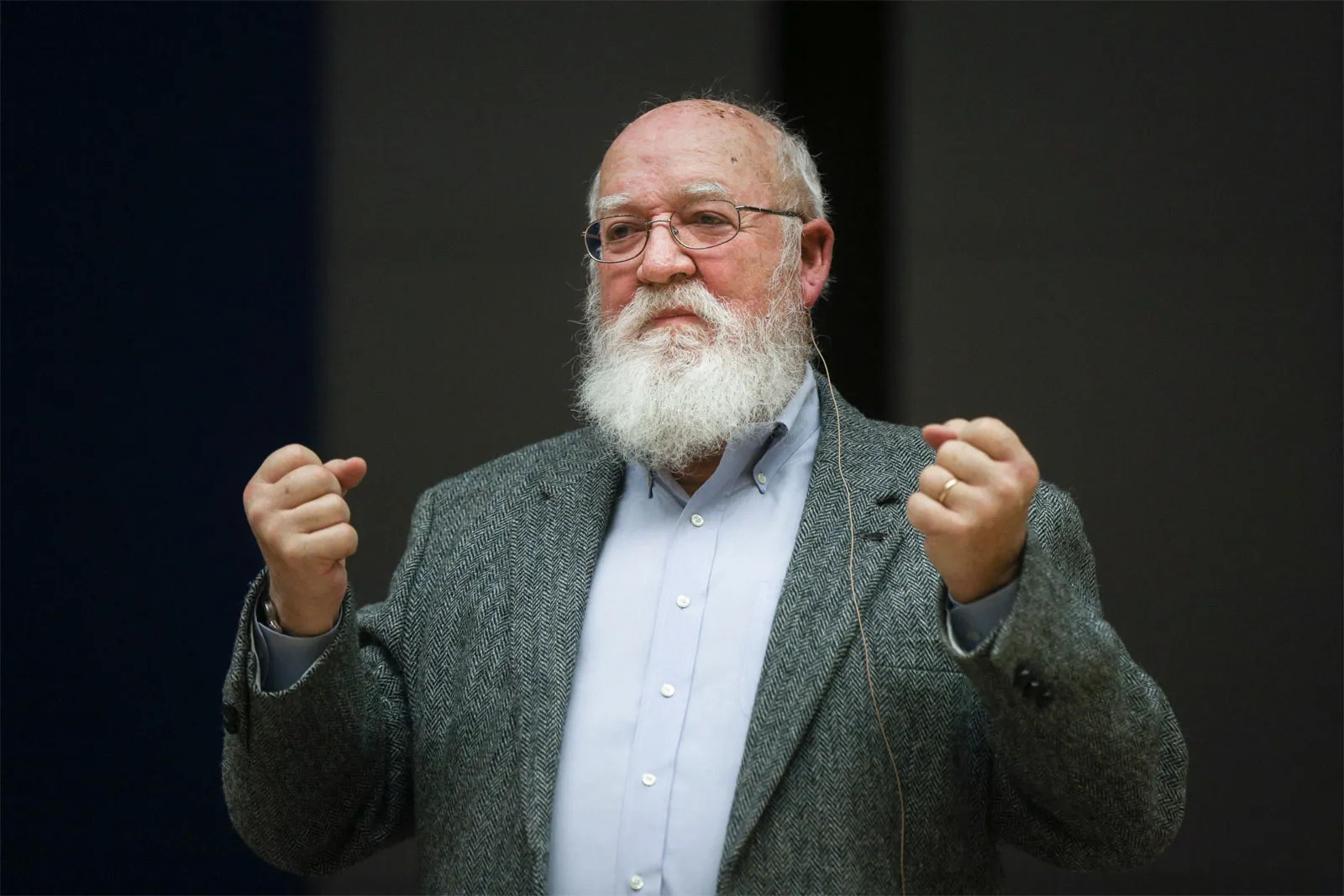
대학원생 부족으로 분노한 듯한 데닛